
Key Takeaways
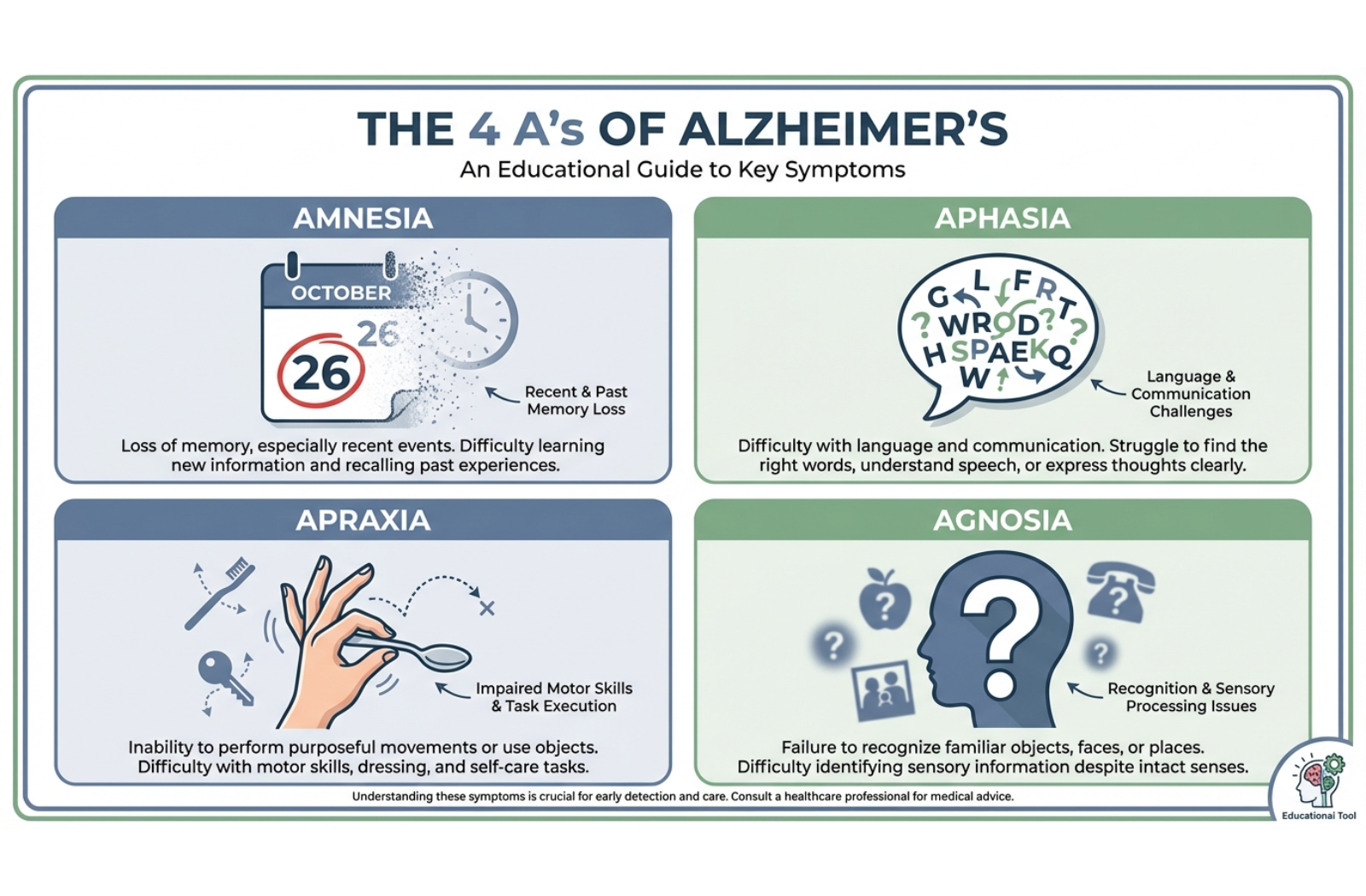
- The 4 A’s provide a helpful way to understand common signs associated with Alzheimer’s. They are Amnesia, Aphasia, Apraxia, and Agnosia.
- Amnesia refers to memory loss that goes beyond typical forgetfulness, especially with recent events.
- Aphasia involves challenges with language, like finding the right words or following conversations.
- Apraxia is a loss of motor skills for familiar tasks, such as getting dressed or using utensils.
- Agnosia is the inability to recognize familiar people, objects, or places.
A Framework to Understand Alzheimer’s Signs
When you notice changes in a loved one’s behavior, it can be confusing. Navigating this journey is a process many families experience, and getting support from a community like Inspired Living at Lakewood Ranch can make a difference. Having a framework to organize your observations can help you better understand and communicate what is happening.
The 4 A’s offer a helpful framework for recognizing some of the common signs associated with Alzheimer’s: Amnesia, Aphasia, Apraxia, and Agnosia. Understanding these categories can give you a clearer picture of the challenges your loved one may face and how to best support them through options like specialized memory care.
Explore Amnesia and Memory Changes
Memory loss is often one of the first signs people notice. But it is more than a simple moment of forgetfulness. It can affect a person’s ability to learn new information or recall past events, which can be disorienting and frustrating.
More Than Simple Forgetfulness
You may see a loved one start to forget important dates, names they once knew well, or conversations that happened just a day before. This differs from occasional age-related memory slips, like misplacing keys. It’s a more consistent pattern of forgetting recently learned information.
Short-Term Versus Long-Term Memory
One of the biggest challenges is the loss of short-term memory. Your family member might ask the same question repeatedly, having forgotten the answer you just gave them. Interestingly, older memories from childhood or early adulthood may remain intact for much longer.
This can also create challenges with daily responsibilities. You might find your loved one misses appointments or has trouble managing medications. This isn’t a reflection of their character but a symptom of the changes happening in the brain, which can be a source of stress for them.
A Look at Aphasia and Communication
Aphasia affects how a person uses and understands language. When communication becomes difficult, it can lead to frustration for everyone involved. Your loved one might withdraw from social situations, but a calendar of engaging social events can provide gentle opportunities for connection.
Trouble with Words and Names
You may notice your loved one struggling to find the right word for a common object, like a spoon or a telephone. They might substitute an incorrect word or describe the object instead of naming it. Knowing some helpful tips for talking with someone who has Alzheimer’s can make these moments easier.
How It Affects Conversations
Following a conversation can become challenging, especially in a group setting. Your family member may lose their train of thought in the middle of a sentence or have a hard time keeping up with the back-and-forth of a discussion.
Patience becomes a key part of your interactions. You can help by speaking clearly in simple sentences and giving your loved one time to respond. Sometimes, non-verbal cues like a gentle touch or a warm smile can communicate more than words and offer reassurance when they feel stuck.
Review Apraxia and Motor Skills
Apraxia happens when the brain has trouble telling the body how to perform familiar, purposeful movements. This occurs even when the muscles are strong and capable. The connection between the intention and the action is disrupted.
Difficulty with Familiar Tasks
Simple, everyday activities can become complex. You may see struggles with tasks that require steps, like buttoning a shirt, using utensils to eat, or getting dressed in the morning. These movements, sometimes referred to as activities of daily living, are ones they’ve done thousands of times before.
Changes in Coordination and Movement
Over time, apraxia can also affect balance and coordination, which might make walking more difficult. A safe and supportive environment becomes very important to help navigate these physical changes. This is where a supportive memory care community can provide peace of mind.
Because apraxia affects purposeful movements, safety can become a concern. A simple task like making tea could present risks, and navigating stairs might become challenging. Creating an environment with clear pathways and fewer obstacles can help reduce the risk of falls or other accidents.
Consider Agnosia and Recognition
Agnosia is the inability to process information from the senses. A person might see or hear something clearly, but their brain can’t make sense of it. This can make it difficult to recognize faces, objects, sounds, or even smells.
Failure to Recognize People or Places
This can be one of the more upsetting changes for families. Your loved one might not recognize a close family member or a friend. They could also become confused in a familiar place, like their own home, which may contribute to unsafe behaviors like wandering.
How It Can Create Confusion
When the world becomes unrecognizable, it can impact a person’s sense of security. A consistent routine and a calm, structured setting can help reduce confusion and bring comfort. This is a core focus in a dedicated dementia care program.
Agnosia can affect all the senses, not just sight. Your loved one might not recognize the purpose of a fork or identify a sound like a ringing doorbell. This sensory confusion can contribute to a feeling of being lost in a once-familiar world, impacting their sense of security.
Find Support for Your Loved One
Understanding the 4 A’s is a helpful first step. When you start to see these signs, it’s natural to wonder what to do next. Supportive senior living communities offer options that adapt to a person’s changing needs.
At Inspired Living at Lakewood Ranch, our team fosters a nurturing environment where residents can thrive. The focus on holistic wellness means supporting each person’s unique journey through comprehensive assisted living, memory care, and respite care programs designed to nurture the mind, body, and spirit.
Contact us to schedule a tour and learn all about our community in person.