


Key Takeaways
- It’s helpful to know the difference between typical age-related memory slips and more significant cognitive changes that affect daily life.
- Key signs that may suggest a need for memory care include shifts in personality, difficulty with familiar tasks, and neglect of personal safety.
- Memory care offers a structured and supportive environment designed to help individuals with dementia or Alzheimer’s.
- When you approach the conversation about senior living with compassion and focus on well-being, the process can be smoother for everyone.
Recognize When a Loved One May Benefit from Memory Care
Noticing changes in a loved one can be a challenging time. You may wonder what these changes mean and what support options are available at communities like Inspired Living at Lakewood Ranch. This guide helps you identify common signs that suggest a person could benefit from the focused support found in a memory care setting.
It’s not about a single moment of forgetfulness but about a pattern of new challenges. When you observe consistent changes that affect daily life, safety, and happiness, it may be time to explore how specialized care can help.
Distinguish Between Normal Aging and Memory Concerns
It’s natural for people to have occasional memory slips as they grow older. Forgetting where you put your keys happens to everyone. However, not knowing what the keys are for is a different kind of challenge. You may also notice a difference between needing help with a new device and being unable to follow a familiar recipe.
The key is to look for patterns that impact daily living and personal safety. While some forgetfulness is a normal part of life, you can learn to distinguish between normal age-related forgetfulness and more serious memory problems. Consistent or growing difficulties can point to something more, where the environment in an assisted living community can offer helpful support.
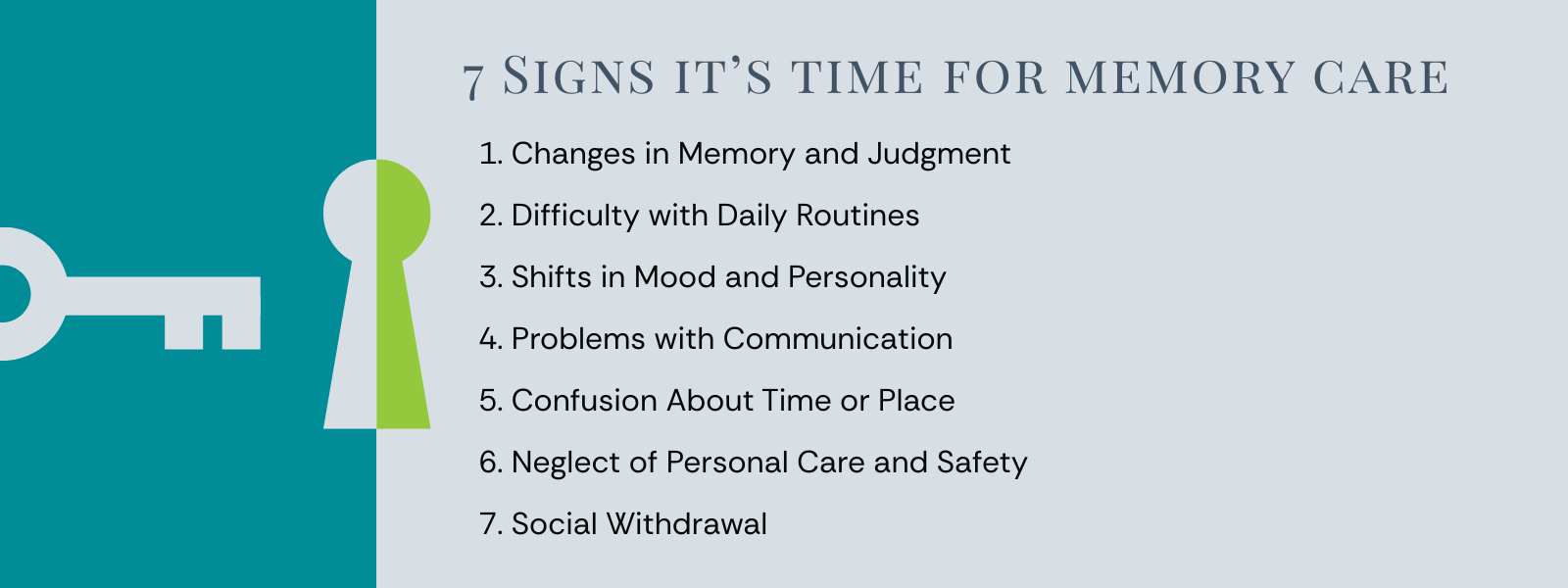
Seven Common Signs That Point to a Need for Memory Care
When you observe these signs, it may be time to learn more about how memory care can help. These programs are designed to provide a supportive and structured environment for those with cognitive changes.
1. Changes in Memory and Judgment
This goes beyond simple forgetfulness. You might notice your loved one repeatedly asks the same questions or struggles with decisions they used to make with ease. Poor judgment with finances, like mishandling money or falling for scams, is also one of the early warning signs of dementia.
2. Difficulty with Daily Routines
Look for challenges with familiar tasks. This can include managing medications, preparing meals, or keeping track of appointments. These are often referred to as activities of daily living (ADLs), and challenges with them can signal a need for more support to manage them.
3. Shifts in Mood and Personality
You may see your loved one become more withdrawn, anxious, or easily agitated. They might lose interest in hobbies and social activities they once enjoyed. These personality shifts can be a sign of cognitive distress, as the person may feel frustrated or confused, leading to difficult behaviors for caregivers to manage.
4. Problems with Communication
Notice if your loved one has trouble finding the right words, following a conversation, or repeating the same stories. Communication can become a source of frustration for them and for you. A patient and supportive environment can make a positive difference.
5. Confusion About Time or Place
Disorientation is a significant sign. This can show up as a person losing track of the date, the season, or even the year. They might also become lost in familiar places, a safety concern that leads families to explore specialized dementia care.
6. Neglect of Personal Care and Safety
A decline in personal hygiene, a messy home, or forgetting to eat are important signs. You might also notice unpaid bills or other signs of household neglect. This is where the structure of memory care can be very helpful, especially when limited mobility adds another layer of complexity.
7. Social Withdrawal
A person experiencing cognitive decline may pull away from friends and family. This can happen because social situations become confusing or overwhelming. A supportive community with structured social gatherings helps to gently re-engage them in a comfortable setting.
How Memory Care Provides Specialized Support
Memory care is a specialized form of senior living. As you explore options, understanding how to move a parent with dementia into a supportive community becomes an important step. It’s more than just a place to live—it’s a community that provides a structured and safe environment.
- A Secure Environment: The physical space is designed to reduce confusion while promoting freedom of movement.
- Trained Team Members: Staff receive specific education on how to communicate with and support individuals with memory loss.
- Structured Activities: Daily programs are created to engage residents and stimulate their minds. AARP provides helpful tips on what to look for in a memory care program, including the types of activities offered.
How to Start the Conversation with Your Family
Talking about your concerns with your loved one and other family members can be difficult. It’s helpful to approach the topic with care and compassion. This can make the process feel more collaborative and less stressful for everyone involved.
- Choose a calm and comfortable time to talk.
- Focus on concerns for their safety and well-being, using specific examples of things you have observed.
- Discuss how a senior living community can add to their quality of life. Framing it this way can make the conversation about assisted living feel more positive.
- Explore options together, which might include assisted living for general support or respite care for a short-term stay to experience the community.
Find the Right Path for Your Loved One
Recognizing the signs is the first step. The next step is to explore the options that can provide the right level of support. Whether it’s the focused support of memory care or the daily help of assisted living, the goal is to enhance your loved one’s well-being.
At Inspired Living at Lakewood Ranch, the team is dedicated to a lifestyle crafted for resident well-being. By fostering new connections and nurturing the mind, body, and spirit, a community can help each person thrive on their unique journey. Come by for a visit and learn more about us!